
Gualtiero, a quarrying pioneer
In 1967, Gualtiero begins quarrying by cutting serpentine erratic boulders: large rocks in the Evançon stream at Isollaz and the Ayasse stream at Chardonnay, in the Champorcher valley.
LA MAISON VUILLERMIN GUALTIERO
From the Resistance to reconstruction. From a chest of drawers to a company. From the Aosta Valley to architecture around the world.
Explore our storyGUALTIERO VUILLERMIN01 / 051927—1947
A generation shaped by the mountains, the war and the need to start again.
Gualtiero was born in 1927 and Dorina in 1928 in the lower Aosta Valley, among small villages where life was closely tied to the mountains and hard work.
During the war, Gualtiero joined the Resistance as a teenager under the name ‘Tarzan’ and was wounded in the hip. After the Liberation, he worked in the municipal administration of Challand-Saint-Victor.
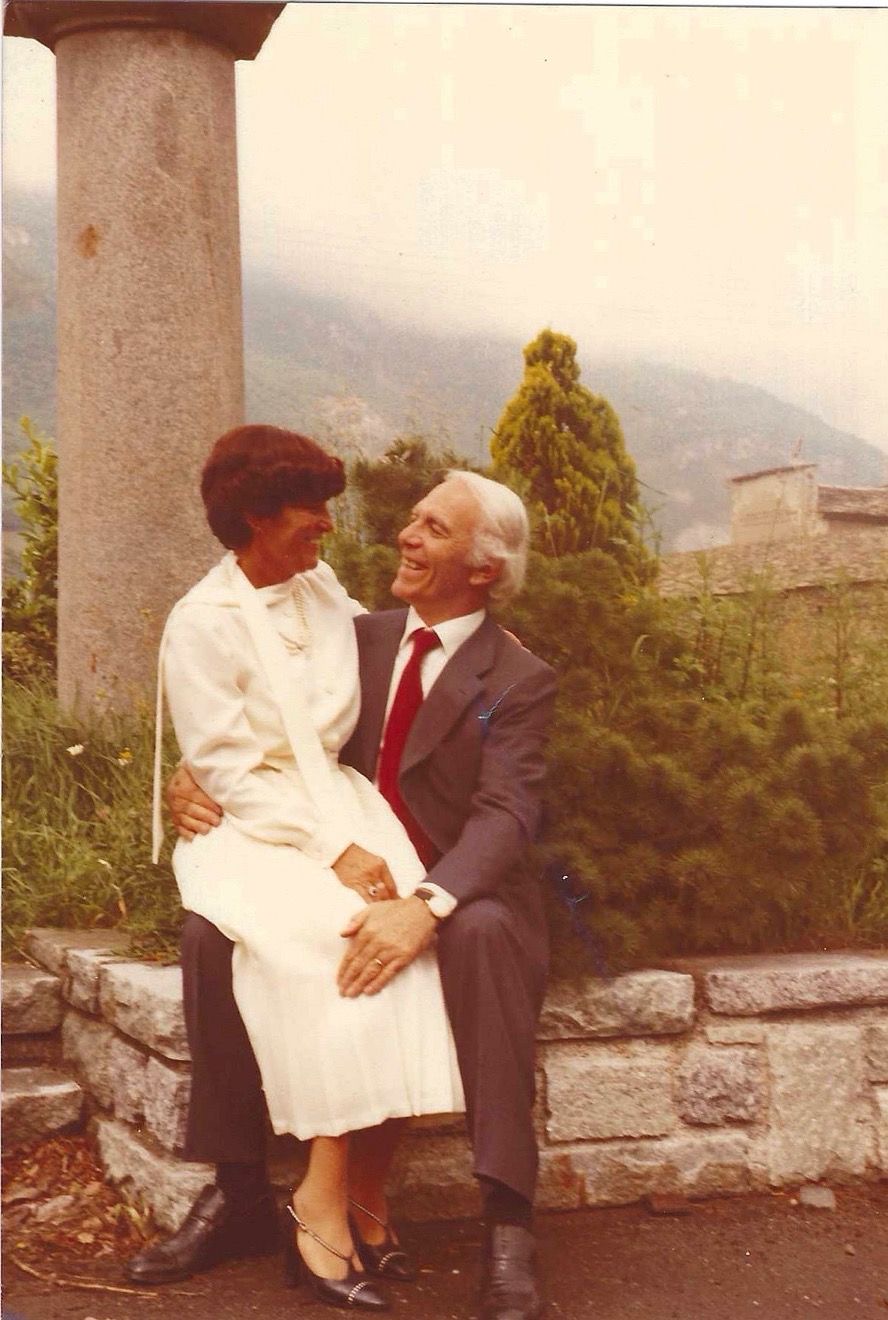
After the war, at eighteen, Dorina fell in love with Gualtiero, a young man from Fleuran who had come to Issogne, two neighbouring villages in the lower Aosta Valley. She was not swayed by the village's opinions. They married in 1947. Her ability to organise and manage the business would prove as important as Gualtiero's drive.


02 / 051951—1960
An old piece of furniture, a train journey and a slab of marble: the beginning of a craft.
It began with a piece of furniture at home. Gualtiero had found an old chest of drawers for Dorina, but its top was damaged. He decided to replace it with a slab of marble: taking the measurements with him, he travelled by train to find the right stone. Once the chest was finished, he saw how a relatively simple piece of stonework could transform an ordinary object. The idea of making a living from stone began there.
Gualtiero was still a municipal employee. Encouraged by a quarry worker, he started working under a shelter offered by the parish priest in Issogne. In 1951 he and Dorina opened the first workshop, making building stonework, engravings and memorials. Dorina took part in the work and kept the accounts, initially recorded in a desk drawer.
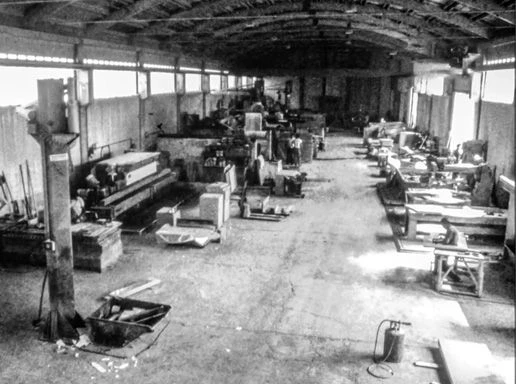
Ivano was born in 1957. To expand the business, Gualtiero sold the house he had recently built and invested in land in Verrès, where the company moved in 1960. The small workshop grew into a business investing in machinery, technical skills and material research.


03 / 051967—2000
A search for materials took the work of Verrès far beyond the Aosta Valley.
Gualtiero travelled through the valleys looking for deposits. New tools and stoneworking methods were tested in the workshop: technical experimentation went hand in hand with a close knowledge of materials. The company invested in skills: from Serpentino in the 1960s to Rosso Pantheon granite and Blue Labradorite, followed by Verde Argento in 1988 and the reopening of Courtil quarry in 1991.
Pietra Verde di Courtil and Granito Verde Argento became the company's signature materials. In the 1990s Centro Pietre and new block-storage facilities supported its growth, while projects reached Europe, Asia and the Americas.


In 1967, Gualtiero begins quarrying by cutting serpentine erratic boulders: large rocks in the Evançon stream at Isollaz and the Ayasse stream at Chardonnay, in the Champorcher valley.
In 1978, the quarrying journey continues with the Granito Rosso Pantheon quarry at Belmonte, in the municipality of Cuorgnè.
In 1983, the Labradorite Azzurra Gran Paradiso quarry joins this journey at Faye, in the municipality of Ronco Canavese.
In 1987, the quarry story expands with Gneiss Verde Montey at Vert, in the municipality of Donnas.
The relaunch of the historic Settimo Vittone quarry strengthens the bond between extraction and bespoke fabrication.
In 1995, the Granito Verde Aosta quarry is added, in the hamlet of Chiaverina at Settimo Vittone.
The company's history includes work for Singapore's metro, the presidential palace in the Maldives and European corporate headquarters. Each destination calls for technical and organisational expertise grounded in knowledge of materials.
04 / 052005—2014
After Gualtiero, Ivano had both a legacy to protect and a new way forward to find.
Gualtiero died in 2005. He left deep knowledge of materials and a belief that quality begins with people. Ivano continued the business in a rapidly changing industry.
Between 2012 and 2014 the company reorganised production, reinforcing material selection, working with specialist workshops and keeping project coordination in-house. Not everything would be fabricated under one roof; responsibility for quality remained with Vuillermin.

« The essential value we possess is human. »
Gualtiero Vuillermin · interview with Francesco Prinetti, Environnement
Gualtiero's curiosity encompassed minerals, techniques and the artistic possibilities of the material. Machines support the work; knowledge, experience and people give it value.
05 / 05TODAY
A Maison is also defined by the knowledge it passes on.
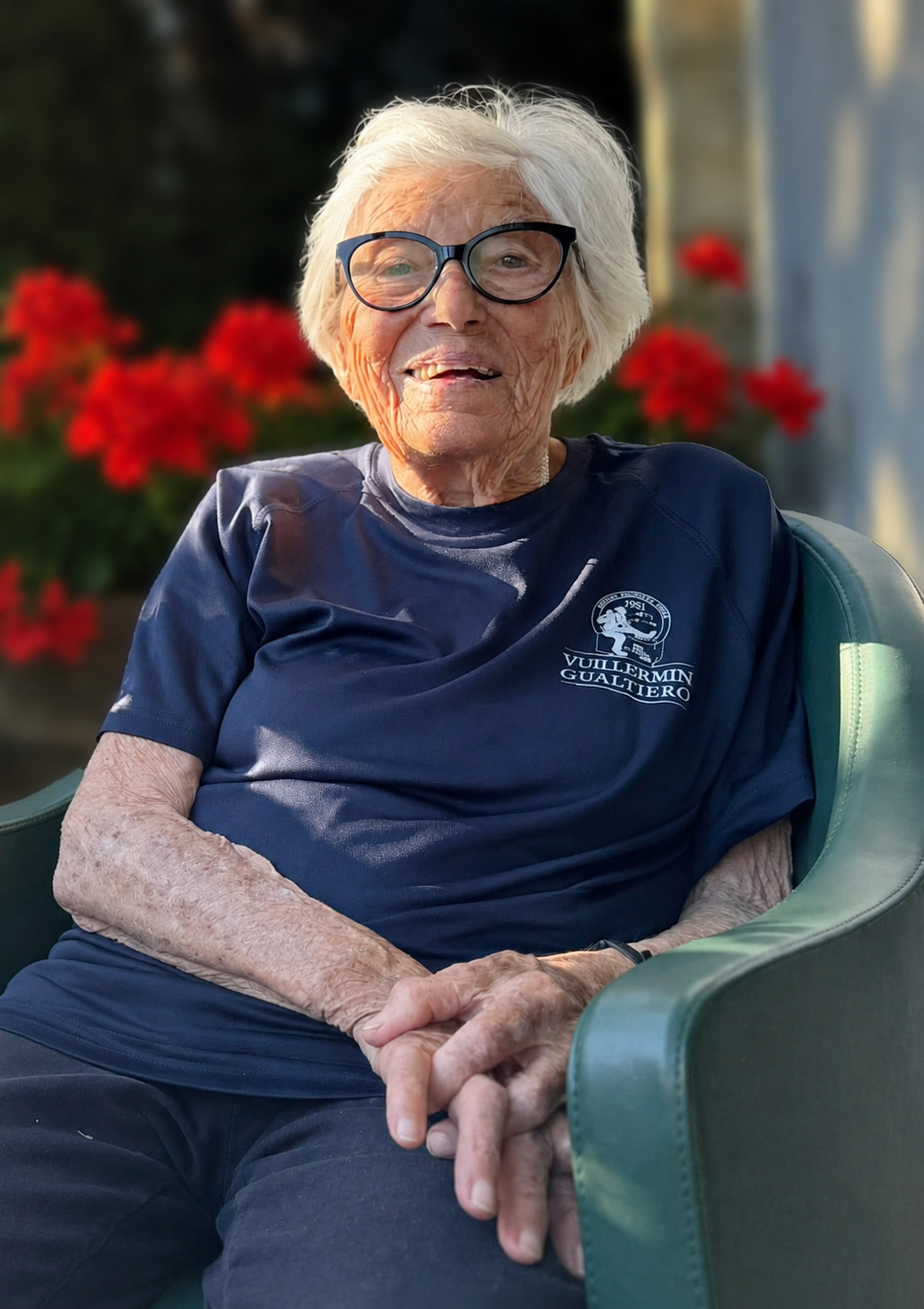
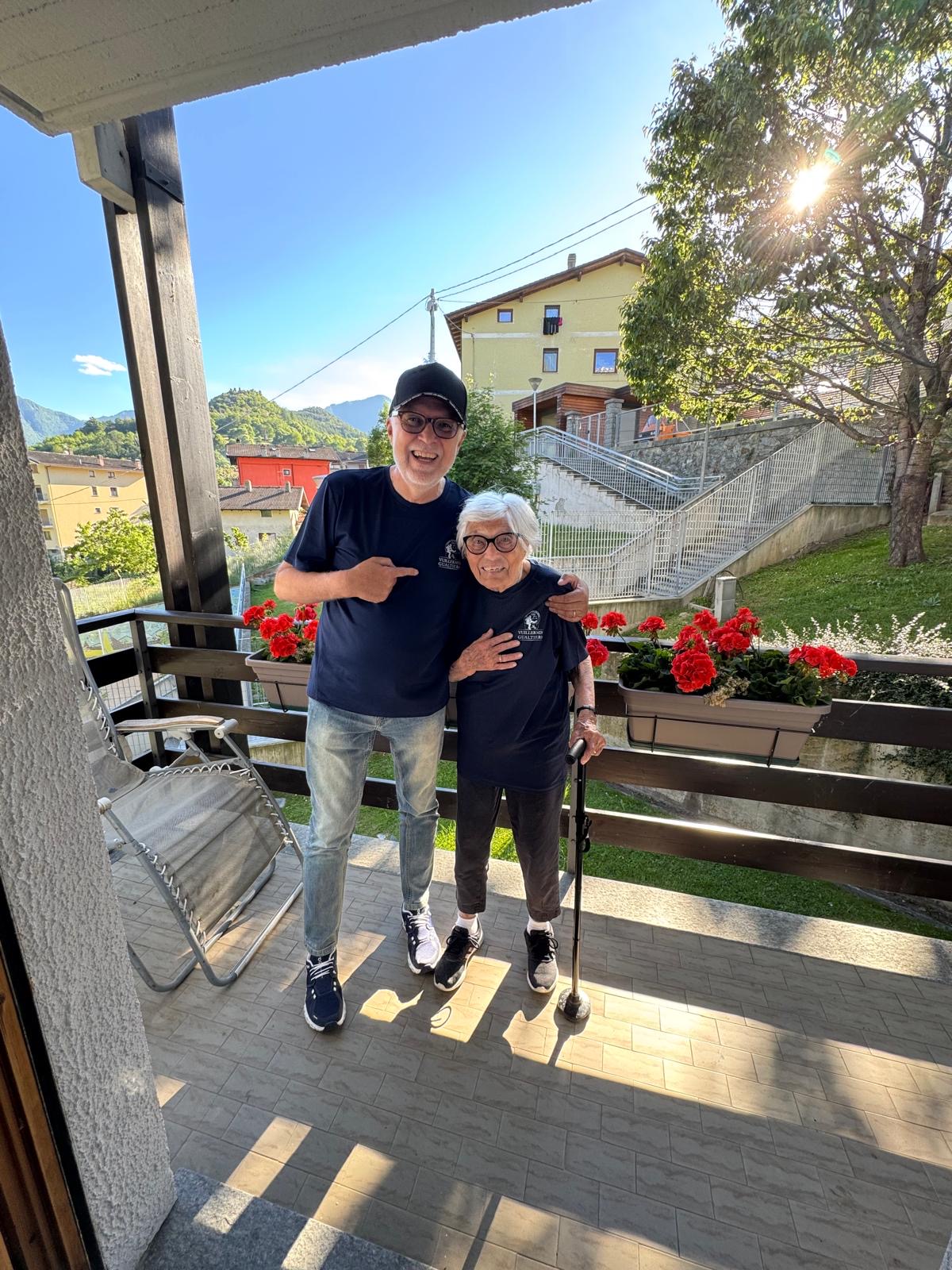
Dorina, the company's co-founder, died in 2026. Her practical judgement had helped turn Gualtiero's ambitions into a lasting business.
Today, knowledge of materials, close dialogue with architects and collaboration with specialised workshops continue that work. From the Aosta Valley to the world, the same commitment remains: know the material, oversee the craft, stand behind the quality.


DORINA DELCHOZ · 1928–2026
Dorina Delchoz passes away on 26 August 2026, aged 98. She played a central role at every stage: from engraving to accounting books, from early sacrifices to the responsibilities of an international business.
Russian-language article · 2019
Enrico Martinet
Laura Secci
Enrico Martinet
Paola Maruzzi · Dossier · 2011
Enrico Martinet · Impronte · 2026
A portrait of Dorina through love letters, work in Switzerland and the accounting drawer: a co-founder who helped turn a vision into a company.
Francesco Prinetti · Environnement · Autonomous Region of Aosta Valley
Gualtiero and Ivano discuss human expertise, craft tradition, technology and the value of Aosta Valley stone.
Read the articleLa Stampa · 13 June 2007
An account of continuity under Ivano, technological investment and international development after the generational handover.
Read the articleVUILLERMIN · 1951—OGGI
Our story on film
« Bien faire et laisser dire »
Doing the work well. From material selection to fabrication, attention to the material and the project connects every stage.